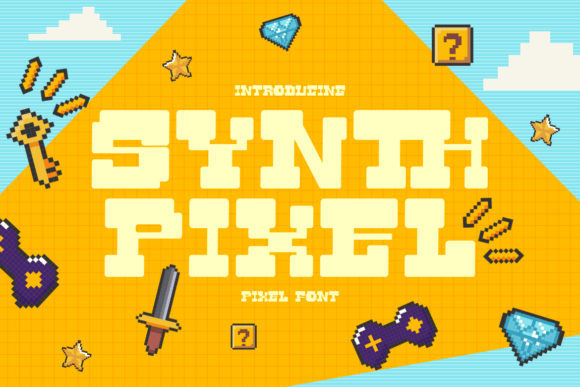
Synth Pixel: The Retro Font Bridging Gaming and Modern Branding
Imagine a typeface that instantly transports your audience to the golden age of arcade cabinets and console cartridges, yet feels perfectly at home in a contemporary digital interface. That's the power of Synth Pixel, a chunky, retro-styled pixel font that masterfully blends 8-bit nostalgia with a bold Y2K aesthetic and modern dimensional depth. For graphic designers, marketers, and creators, it represents more than just a creative asset—it's a versatile tool for injecting personality, energy, and unmistakable character into a wide array of visual projects.
Understanding the Design Language of Synth Pixel
At its core, Synth Pixel is a display typeface built on blocky, square-based letterforms with pixel-perfect proportions. This isn't a simple digital replication; it’s an evolution. The font features smooth geometric edges and vibrant outlines, offering both flat and shadow-stacked variations. This provides crucial flexibility within a design workflow. The inclusion of uppercase, lowercase, numerals, and full punctuation ensures complete creative control, allowing you to maintain consistency across headlines, subheads, and supporting text. Its design philosophy is a direct nod to early console typography, but the added depth and clean construction make it a serious player in modern graphic design.
Practical Applications for Maximum Impact
The true value of a typeface like Synth Pixel lies in its application. Its joyful, high-energy personality makes it exceptionally effective for projects where grabbing attention and evoking a specific feeling are paramount. Consider integrating it into your creative projects for:
- Brand Identity & Logo Design: Perfect for tech startups, indie game studios, music producers, or any brand aiming for a playful, innovative, or nostalgic identity. It creates a memorable first impression that stands out in a crowded market.
- Digital Marketing & Social Media: Elevate your social media graphics, YouTube thumbnails, and Twitch overlays. Its chunky forms ensure readability even at small sizes on busy platforms, boosting engagement and click-through rates.
- UI/UX and Web Design: Use it strategically for call-to-action buttons, navigation labels, or section headers in gaming apps, retro-themed websites, or interactive digital experiences. It enhances the user interface with thematic cohesion.
- Packaging & Merchandise: From indie game cartridge labels to event posters and branded apparel, this font delivers the authentic, tactile feel of retro gaming culture, directly appealing to a passionate demographic.
- Editorial and Presentation Design: Break the monotony of traditional layouts. Use Synth Pixel for pull quotes, magazine headers, or slide deck titles to inject a dose of creativity and visual hierarchy that commands attention.
Tips for Effective Typographic Integration
Integrating a distinctive display font requires thoughtful consideration to maintain a professional presentation. First, establish clear visual hierarchy. Pair Synth Pixel with a clean, neutral sans-serif for body text to ensure readability and balance. Second, consider your color palette. The font’s geometric style pairs beautifully with vibrant, saturated colors or stark, high-contrast monochrome schemes. Its outlines can be colored to match brand guidelines, adding another layer of customization. Finally, always test for scalability. Preview your designs at multiple sizes to ensure the pixel details remain crisp and the text stays legible, whether it’s on a mobile screen or a large-format print. This attention to detail separates good design from great design.
In the evolving landscape of visual communication, choosing the right typography is a critical design decision. It shapes perception, guides the user experience, and solidifies brand recall. Synth Pixel demonstrates how a thoughtfully crafted creative asset can bridge two distinct design eras, offering both nostalgic charm and contemporary utility. By selecting typefaces that align with your project’s goals and audience expectations, you invest in more than just aesthetics—you build a more effective, engaging, and cohesive visual language that truly connects.